
For international chocolate manufacturers, industrial grinders, and global agricultural trading houses, obtaining an official Cocoa Certificate of Origin Cameroon is a critical regulatory requirement when importing raw cocoa beans (Theobroma cacao) from Central Africa. This official commercial instrument verifies the geographic origin of the cargo, allowing buyers to qualify for preferential customs tariff treatments, satisfy international trade agreements, and comply with strict port entry regulations across Europe, Asia, and the Americas.
As a primary producer, processor, and licensed exporter, Noumedem Global Trade manages every administrative and logistical step required to issue a valid Cocoa Certificate of Origin Cameroon. Operating from Douala with plantation infrastructure in Melong and sourcing networks across the Centre and South regions, we provide global commodity buyers with fully authenticated documentation, EUDR-compliant traceability, and Grade 1 Cameroonian cocoa beans.
Understanding the Importance of the Cocoa Certificate of Origin Cameroon
When importing raw cocoa into European, North American, or Asian ports, securing an official Cocoa Certificate of Origin Cameroon provides foreign importers with essential tariff benefits and customs compliance. Beyond basic import clearance, this legal document serves as proof that the cocoa beans were genuinely harvested, fermented, and sun-dried within Cameroon’s national territory.
Securing an authentic certificate delivers four strategic commercial advantages:
Preferential Tariff Treatment: Enables buyers to claim duty-free or reduced tariff rates under international trade frameworks such as the Economic Partnership Agreement (EPA) with the EU, the African Continental Free Trade Area (AfCFTA), and the Generalised Scheme of Preferences (GSP).
International Coffee & Cocoa Organization (ICCO) Tracking: Ensures full alignment with global trade quotas, statistical reporting, and international market standards.
Prevention of Fraudulent Re-Routing: Guarantees that low-grade cocoa from neighboring origins is not improperly mixed or falsely declared under Cameroonian trade allocations.
Customs Clearance Speed: Eliminates costly port storage fees (demurrage) by presenting verified documentation directly to destination customs authorities.
Issuing Authorities and Legal Validation Framework
The regulatory issuing process for a Cocoa Certificate of Origin Cameroon involves coordinated oversight between several national bodies responsible for regulating international agricultural commerce:
National Cocoa and Coffee Board (NCCB / ONCC): The primary technical authority in Cameroon responsible for certifying bean quality, bag count, net export weight, and official origin classification.
Chamber of Commerce, Industry, Mines and Crafts (CCIMA): The official institutional body authorized to issue standard non-preferential certificates of origin for general international commerce.
Directorate General of Customs (Direction Générale des Douanes): Validates EUR.1 movement certificates and preferential origin declarations for trade with European Union ports.
Ministry of Commerce (MINCOMMERCE): Supervises national export allocations and enforces compliance with international commodity treaties.
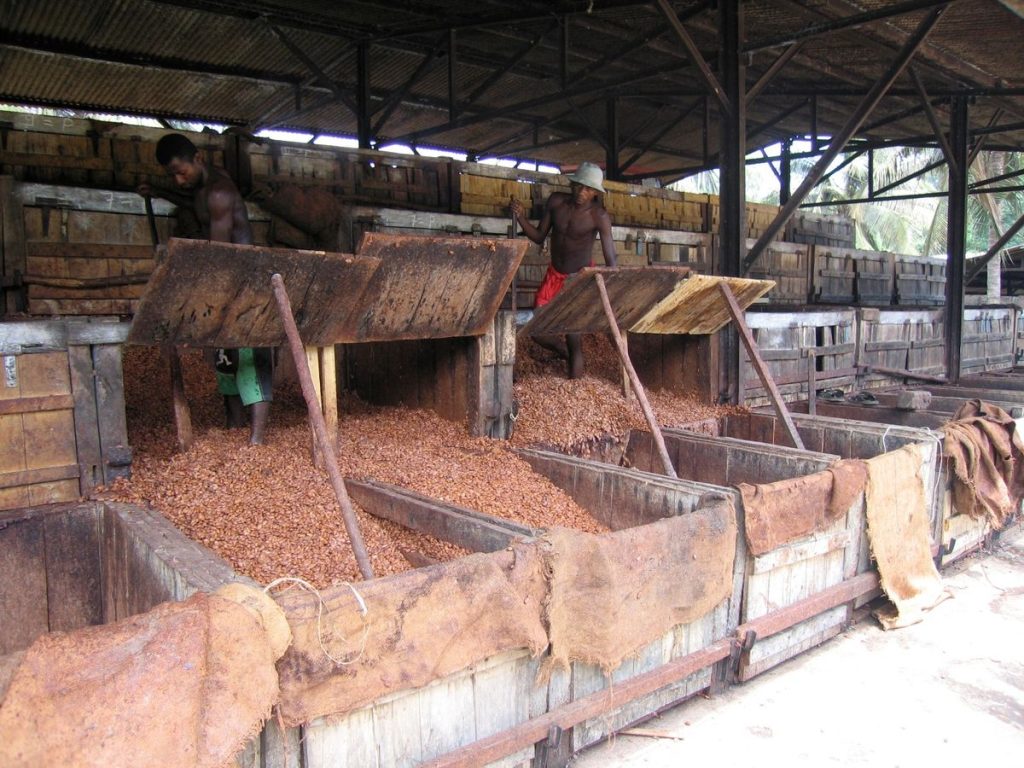
Quality Inspection & Physical Verification Protocols
Every single shipment requiring a Cocoa Certificate of Origin Cameroon must undergo physical cut-testing, moisture analysis, and weight verification conducted by official ONCC inspectors prior to container sealing at the port terminal.
Key Quality Parameters Verified Prior to Certification:
Moisture Content: Strictly stabilized between $7.0\%$ and $7.5\%$ to prevent mold formation during ocean transit.
Bean Count & Sizing: Standardized at 95 to 105 beans per 100 grams for Grade 1 export allocations.
Natural Fat Content: High cocoa butter yield ($> 52\% – 54\%$) characteristic of Cameroonian red cocoa.
Defect Rates: Maximum allowable limits of 3.0% moldy, 3.0% slaty (unfermented), and 2.5% insect-damaged beans under Grade 1 standards.
Technical Documentation & Export Dossier Matrix
The complete administrative dossier accompanying a Cocoa Certificate of Origin Cameroon includes several supporting export documents designed to guarantee full legal and physical transparency.
| Export Document | Issuing Authority | Primary Operational Function |
| Certificate of Origin (EUR.1 / CCIMA) | Customs / CCIMA | Proves legal harvest origin & provides tariff preferences |
| ONCC Quality & Weight Certificate | ONCC / NCCB | Certifies Grade 1 bean specs, moisture content, & net weight |
| Phytosanitary Certificate | Ministry of Agriculture (MINADER) | Confirms cargo is pest-free and phytosanitarily compliant |
| Bill of Lading (B/L) | Ocean Shipping Line (e.g., MSC) | Serves as official title of goods & transport contract |
| EUDR Due Diligence Statement (DDS) | European TRACES / Exporter | Links export lot directly to GPS farm polygon data |
+-----------------------------------------------------------------------------------+
|               NOUMEDEM GLOBAL TRADE DOCUMENTATION & EXPORT FLOW                   |
+------------------------------------+----------------------------------------------+
| On-Farm Harvest & GeoShare Mapping | GPS polygon data recorded in Melong          |
| Quality Inspection & Cut-Test      | ONCC verifies Grade 1 parameters at port hub |
| Document Issuance & Stamping       | Certificate of Origin & Phytosanitary issued |
| Ocean Container Loading            | Bill of Lading generated upon vessel departure|
+------------------------------------+----------------------------------------------+
EUDR Compliance and Digital GeoShare Integration
Modern global buyers require that origin documentation be seamlessly linked with digital environmental data. Integrating EUDR due diligence with a Cocoa Certificate of Origin Cameroon guarantees that importers avoid customs holds at European discharge ports under EU Regulation 2023/1115.
Noumedem Global Trade connects every export dossier to Cameroon’s national GeoShare platform and ONCC TRACE database. We record GPS farm polygons for our plantations in Melong and partner cooperatives in the Centre and South regions. Each 20ft FCL (carrying 16.0 Metric Tons) or 40ft FCL (carrying 25.0 Metric Tons) is delivered with verified Due Diligence Statements (DDS), cross-referencing the official Certificate of Origin directly with GPS farm coordinates and ocean Bill of Lading numbers.
Export Logistics, Shipping Terms, & Port Operations
When shipping under FOB, CFR, or CIF trade terms, presenting a validated Cocoa Certificate of Origin Cameroon to ocean carriers and destination customs authorities ensures rapid, unhindered port clearance.
Primary Export Harbors: Port of Douala and Kribi Deep Sea Port.
Standard Packaging: 62.5kg food-grade jute bags lined with GrainPro hermetic inner liners to protect bean quality.
Container Loading Capacity: 20ft FCL contains 16.0 Metric Tons (256 x 62.5kg bags); 40ft FCL contains up to 25.0 Metric Tons.
Payment Terms: Confirmed, Irrevocable Letter of Credit (L/C at sight) or Telegraphic Transfer (T/T).
Partner with Noumedem Global Trade for Fully Certified Allocations
Contact our export desk today to secure your 2026 cocoa allocations complete with an authentic Cocoa Certificate of Origin Cameroon. As a direct producer, processor, and licensed exporter based in Douala, Noumedem Global Trade provides high-fat Grade 1 red cocoa, uncompromised document integrity, and full regulatory peace of mind.